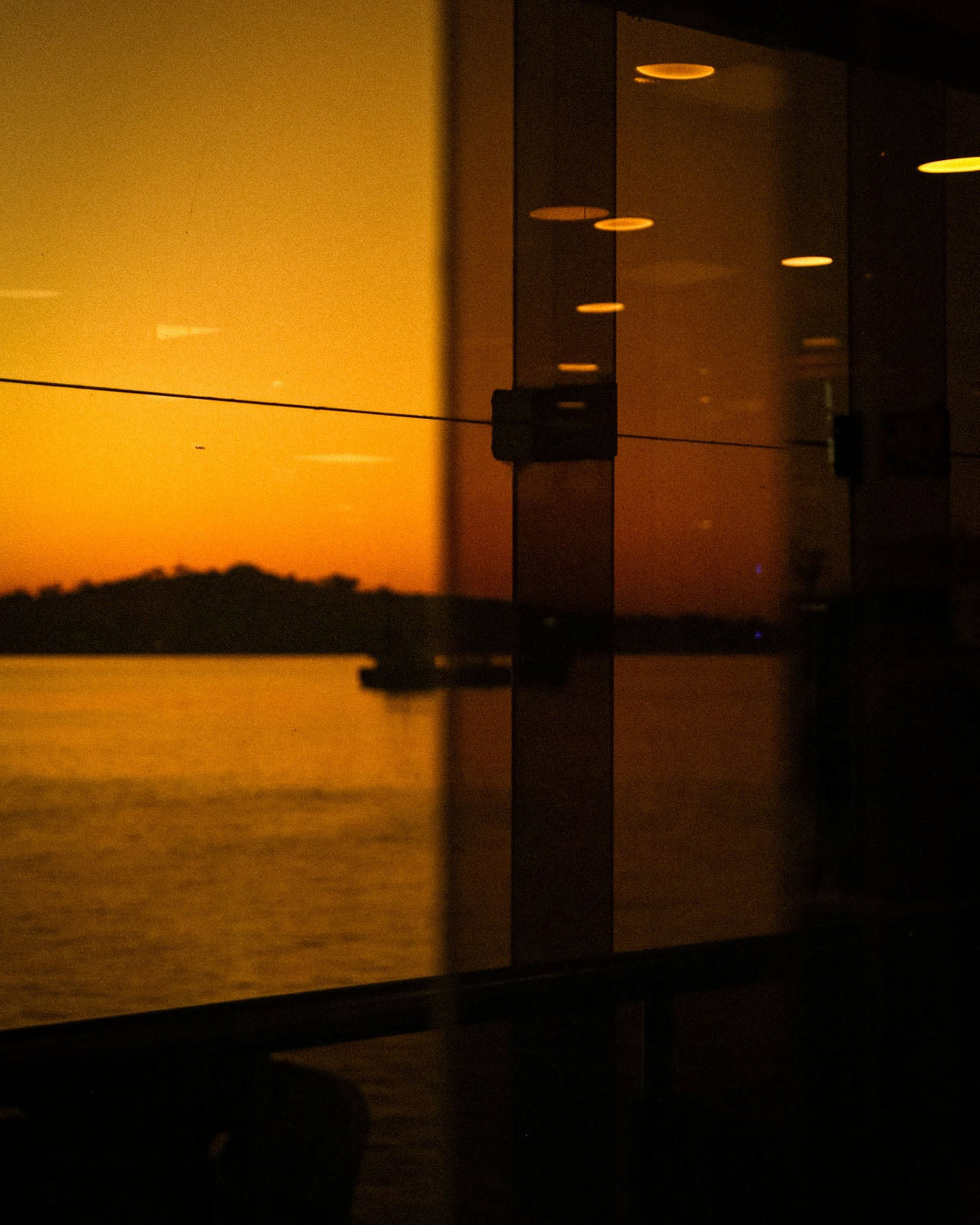
Something shifts at this time of year, and it usually gets attributed to mood or motivation. Mornings become harder. Energy dips earlier in the afternoon. Evenings feel longer. The instinct is to treat it as a discipline problem. In fact, a good deal of it is a light problem, and understanding that makes it far easier to work with. Here is what changes as the days shorten, and what actually helps.
Your clock reads light before anything else
The internal clock is calibrated primarily by light, and specifically by light received in the hours around waking. As the days shorten, two things change at once. There is less total daylight available, and the light that is available arrives later and disappears earlier.
The result is that many people move from waking in daylight to waking in darkness across a matter of weeks. The signal the clock relies on to set its timing simply arrives later, and timing drifts later with it.
Indoor lighting does not compensate for this in the way people assume. A bright office is a fraction of the intensity of an overcast morning outdoors. From the perspective of the circadian system, an indoor winter day contains very little information.
The body responds to day length
Human physiology retains a measurable sensitivity to photoperiod, the length of the light phase across the day.
Research has shown that under shorter photoperiods, the duration of melatonin secretion extends. In other words, the body's biological night lengthens as the daylight shortens. Studies of circadian entrainment across seasons have similarly found that the internal clock shifts later in winter relative to summer, and that weekend behaviour amplifies that shift.
This helps explain a familiar pattern. Waking feels heavier because melatonin is still present at the moment the alarm goes. Afternoon energy dips earlier because the biological day is compressed. Evenings feel longer because darkness arrives well before the body is ready for sleep.
Mood and energy are part of the same system
For some people the effect extends beyond timing. Seasonal changes in mood have been formally described since the 1980s, and reduced light availability is understood to be a central factor. Light therapy has been studied extensively in this context, and meta-analysis has reported meaningful effects on seasonal mood symptoms.
It is worth saying clearly that persistent low mood is not something to manage alone or to treat as a seasonal inevitability. If it is affecting daily functioning, it is worth a conversation with a GP.
Where to start
Treat morning light as non negotiable, not optional. This is the intervention with the most direct mechanism behind it. Fifteen to thirty minutes outdoors as early as you can manage. Overcast still counts, and considerably more than indoor lighting does.
Hold your wake time. As mornings get darker, wake times tend to slide later, which compounds the problem. Holding a consistent wake time is more valuable in winter than in summer.
Take light at lunch if the morning is impossible. Midday daylight is less powerful for setting timing than early light, but it is far better than none.
Bring the evening down deliberately. Because darkness arrives early, the evening becomes long. Keeping lighting low in the final hours prevents that stretch from delaying melatonin further.
Resist the urge to sleep much longer. Extending sleep by thirty to sixty minutes is reasonable. Sleeping several hours later at weekends will pull timing later still.
Keep movement in the schedule. Daytime activity supports sleep pressure and often overlaps conveniently with getting outdoors.
The shift in how you feel across autumn and winter is not a failure of willpower. It is a rational response to a changed light environment. Which means the most useful adjustments are not about doing more, but about deliberately restoring the signal the body has lost.
Sources
Wehr TA. (1991). The durations of human melatonin secretion and sleep respond to changes in daylength (photoperiod). Journal of Clinical Endocrinology and Metabolism, 73(6), 1276 to 1280.
Stothard ER et al. (2017). Circadian entrainment to the natural light-dark cycle across seasons and the weekend. Current Biology, 27(4), 508 to 513.
Wright KP Jr et al. (2013). Entrainment of the human circadian clock to the natural light-dark cycle. Current Biology, 23(16), 1554 to 1558.
Rosenthal NE et al. (1984). Seasonal affective disorder: a description of the syndrome and preliminary findings with light therapy. Archives of General Psychiatry, 41(1), 72 to 80.
Golden RN et al. (2005). The efficacy of light therapy in the treatment of mood disorders: a review and meta-analysis of the evidence. American Journal of Psychiatry, 162(4), 656 to 662.